
Which Home Improvements Actually Add Value in Carmel Luxury Real Estate
By Carmel Luxury Group, Coldwell Banker Realty ·
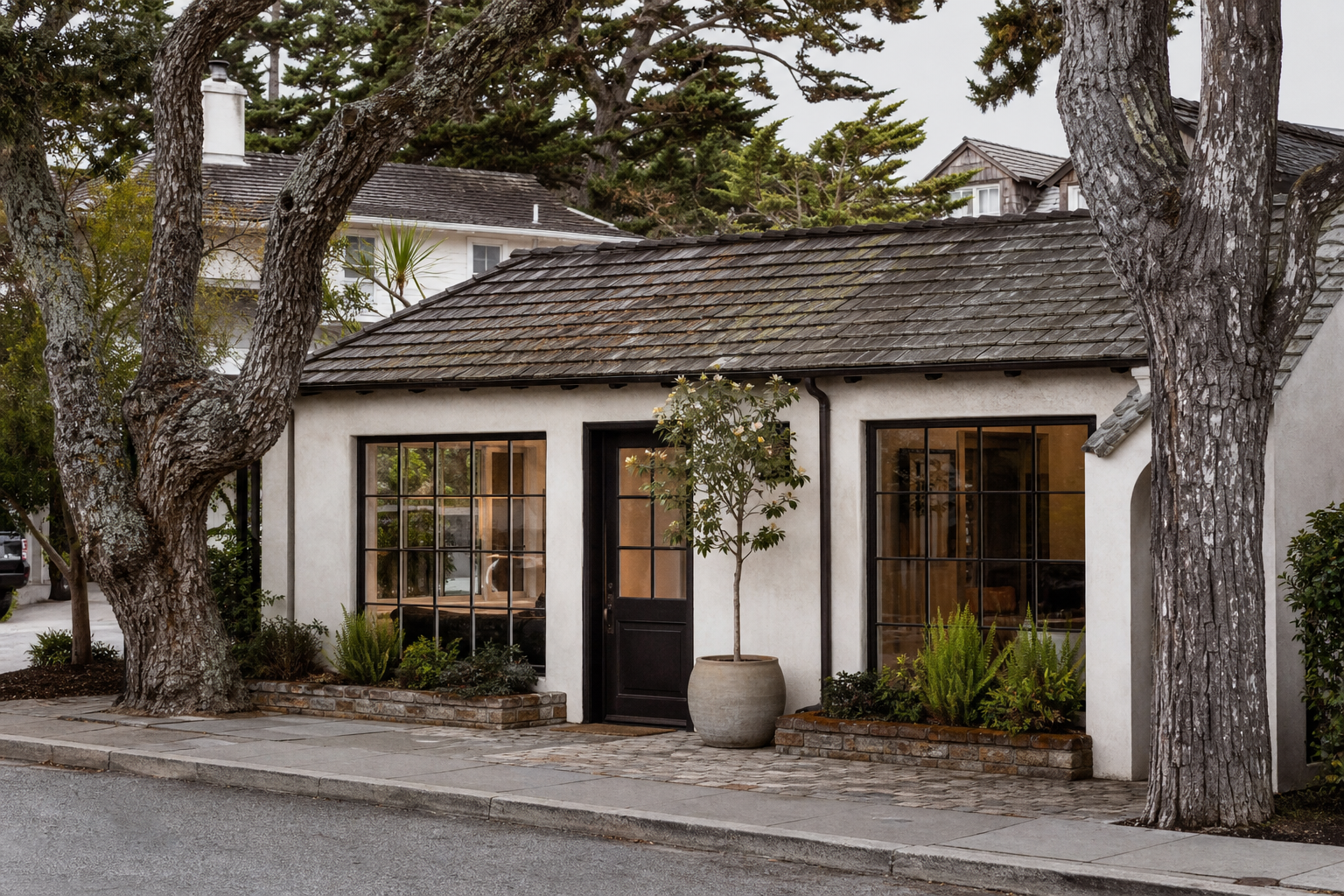
In Carmel luxury homes, the improvements that add real market value are those that remove buyer objections, match the competitive finish level, and respect the home's architectural character, not the most expensive or most customized features. Kitchens, bathrooms, outdoor living, and reliable systems consistently matter most.
Which improvements truly add value to Carmel luxury homes?
In Carmel luxury homes, the improvements that move the needle are those that eliminate visible objections, align with what comparable homes already offer, and honor the property's architectural identity. No renovation carries a guaranteed dollar return, but a well-executed kitchen, updated bathrooms, sound systems, and a refined outdoor connection consistently influence buyer decisions and appraisal support across the Carmel market.
Key Takeaways
The median sale price in Carmel-by-the-Sea is $2,500,000, with homes spending a median of 49 days on market, based on recent local market data, context that shapes which finish levels and features matter to buyers at this price point.
Improvements that remove functional objections (failing systems, deferred maintenance, water intrusion) protect value and prevent buyer discounts, even when they don't create a visible premium over a fully maintained comparable.
Outdoor living designed for Carmel's cool marine climate, covered seating, durable hardscape, mature planting, is among the most buyer-aligned investments a seller can make on a coastal property.
Renovations that erase original architectural character in a Carmel cottage or historic home can narrow the buyer pool, even when the construction quality is high.
Over-customized features (elaborate theaters, oversized wine cellars, highly specialized rooms) rarely recover their cost unless they genuinely suit the home and can be presented as flexible spaces.
What do Carmel luxury buyers actually pay attention to?
Before committing capital to any project, it helps to understand the market you're improving into. Across the Carmel area, price points and buyer expectations vary considerably by location.
AreaMedian Sale PriceMedian Days on MarketCarmel$550,00027Carmel-by-the-Sea$2,500,00049Carmel Valley$1,712,50055Monterey$1,150,00047Pacific Grove$1,182,00053Seaside$787,50057
Recent local market data shows 266 active listings across the area, with 98 new listings in the past 30 days and 417 homes sold in the trailing 90 days. That level of activity means buyers have genuine choices, and a property that presents well against its competitive set moves faster and at stronger prices than one that asks buyers to look past condition issues.
William's starting point with every seller is the comparable set, not a wish list of upgrades. The question is never whether a project is "luxury" in the abstract, it's whether the materials, scale, craftsmanship, and functionality are consistent with the best nearby homes a buyer will also tour. A renovation that falls below that bar weakens marketability. One that far exceeds it may not recover its incremental cost. For a deeper look at what drives value at the property level, this post on what drives home value in Carmel-by-the-Sea covers the underlying factors in more detail.
In William's experience working with sellers across Carmel luxury homes, the properties that achieve the strongest results are almost never the ones with the most features. They're the ones that have been prepared with discipline: the right improvements, executed well, calibrated to what the market will actually reward.
Condition and systems come first
Replacing failing systems, correcting water intrusion, improving drainage, and addressing deferred maintenance may not produce a visible premium over a fully maintained comparable. But they prevent something equally damaging: buyer discounts, failed inspections, re-negotiations after contingency reviews, and deals that unravel late. On a Carmel luxury home, a $30,000 price reduction triggered by an inspection finding is a far worse outcome than a $15,000 systems repair before listing.
Carmel's coastal environment also demands attention that inland markets don't. Salt air, marine moisture, fog, and wind accelerate deterioration of exterior metals, wood finishes, paint, roofing components, and mechanical equipment. Durable materials, proper detailing, drainage, and documented maintenance build buyer confidence in ways that are hard to quantify but easy to feel during a showing.
Kitchens and bathrooms: the right level, not the highest level
A well-designed kitchen remains one of the most buyer-aligned investments in a Carmel luxury home. That does not mean the most expensive kitchen. It means a kitchen whose finishes, appliances, layout, and lighting are consistent with what a buyer at this price point expects, and that doesn't present functional objections (dated cabinetry, poor flow, inadequate storage, failing appliances) that pull attention away from the rest of the home.
The same logic applies to primary bathrooms. Updated fixtures, quality stone or tile, proper ventilation, and refined lighting matter. A bathroom that feels unfinished or dated in a $2.5 million property is a negotiating point for every buyer who walks through. One that reads as complete and well-executed is simply not an issue.
According to the National Association of Realtors' Remodeling Impact Report, kitchen and bathroom updates consistently rank among the projects most likely to appeal to buyers and support resale, though actual returns vary by market, price point, and execution. The Remodeling Magazine Cost vs. Value Report similarly shows that mid-range improvements in high-cost coastal markets tend to recover more of their cost than over-the-top renovations that exceed the neighborhood ceiling.
Where Carmel luxury buyers pay a premium: outdoor living and views
Outdoor space is not an amenity in Carmel, it's an extension of the home. Buyers at the luxury price point expect a seamless connection between interior living areas and exterior ones, and they expect that connection to work in Carmel's actual climate: cool, often overcast, with marine air and occasional wind.
That means covered or sheltered seating areas matter more than open sun decks. Durable hardscape (stone, concrete, quality pavers) matters more than elaborate water features. Mature, well-maintained planting matters more than recently installed landscaping that hasn't grown in. Discreet, well-placed exterior lighting extends usability and improves evening presentation considerably.
A warm-climate resort model, open-air pools, exposed pergolas, tropical planting, can look out of place and underperform in Carmel's environment. The National Association of Home Builders' research on what buyers want consistently shows that outdoor living is among the highest-priority features for luxury buyers, but the design must fit the climate and the home.
Views are a different category. Ocean, forest, and village views are among the most property-specific assets in the Carmel market, and improvements that preserve or frame an existing view corridor can be meaningfully valuable. Improvements that obstruct one, an addition that blocks a primary living area's sightline, a second-story element that eliminates a bedroom view, can reduce appeal even when the construction itself is high quality. Before building anything that alters the roofline or footprint, evaluate sightlines from every primary living area, terrace, and bedroom. For sellers weighing the tradeoffs between different property types and locations, this comparison of oceanfront versus hillside living in Carmel Highlands is worth reading.
Smart-home technology: useful, not a premium driver on its own
Luxury buyers in Carmel expect certain baseline technology: reliable high-speed connectivity, integrated audio-visual systems, quality lighting controls, and security. These features support a smooth showing and signal that the home has been maintained and updated. What they don't do, on their own, is drive a measurable price premium.
The NAR's generational trends research shows that technology features rank as important to buyers but rarely as primary purchase drivers. A well-integrated system that works reliably is an asset. A complicated or proprietary system that requires explanation at every showing can become a liability. Keep it functional, keep it current, and keep it simple to operate.
Architectural character: the most overlooked value driver
Carmel-by-the-Sea includes some of California's most architecturally distinctive residential properties, original cottages, stone and timber homes, properties with genuine historic provenance. A renovation that erases original proportions, replaces historic materials with contemporary substitutes, or imposes a different architectural vocabulary on a building with a clear identity can narrow the buyer pool significantly, even when the construction quality is high.
This is one area where William is direct with sellers: the buyer who values an original Carmel cottage is not the same buyer who wants a contemporary open-plan renovation. Improvements should generally be subordinate to the home's architectural identity, not in competition with it. For owners of Carmel luxury homes considering a remodel, this practical remodeling guide for Carmel-by-the-Sea addresses the planning and permitting considerations specific to this market.
What to avoid: over-customization without a buyer case
Elaborate home theaters, oversized wine cellars, highly specialized fitness rooms, and unusual room conversions share a common problem: they appeal strongly to one type of buyer and leave everyone else uncertain what to do with the space. In a market where Carmel luxury homes already carry a selective buyer pool, reducing that pool further with a feature that only works for one lifestyle is a real cost.
These features are not always wrong. A wine room that fits naturally into a Carmel Valley property with vineyard adjacency is a different proposition than an oversized wine cellar grafted onto a village cottage. The question is whether the feature genuinely suits the home and can be presented as a flexible, appealing space, or whether it exists primarily because the seller wanted it. William walks sellers through this distinction directly, before any capital is committed.
The Appraisal Institute notes that highly customized improvements are among the most difficult to support with comparable sales, which means appraisers may assign them limited or no incremental value even when their construction cost was substantial. That gap between cost and appraised value matters, especially in transactions involving financing.
How to decide whether a specific improvement is worth it
The answer depends on three things: what the comparable homes already offer, what objections a buyer would raise without the improvement, and what the improvement costs relative to the price range it supports.
William's approach before any listing is to identify the relevant comparable set and assess where the subject property sits within it. If the kitchen is the weakest in the competitive set, updating it closes a gap. If it's already competitive, updating it further may not recover the investment. The same logic applies to every line item.
A local agent can identify the comparable set. An architect or contractor can assess feasibility and permitting. An appraiser can explain whether a proposed feature is likely to receive support from comparable sales. Getting all three perspectives before committing capital is how sellers in this market avoid the most common mistake: spending on what they personally value rather than what the buyer pool will pay for.
Your specific situation, the home's current condition, its price point, its architectural character, and the current competitive set, determines which improvements make sense. That's a conversation worth having before any work begins. Pairing a well-prepared home with effective staging is often where the final presentation comes together, and it's worth planning both in sequence.
According to the CFPB's guidance on home improvement decisions, understanding the financial implications of renovation before committing is essential, particularly when the project involves financing. The HUD 203(k) rehabilitation loan program and similar instruments exist for buyers, but sellers planning pre-sale improvements typically fund them directly, which makes the cost-benefit analysis even more important to get right before breaking ground.
For sellers considering eco-conscious upgrades, increasingly relevant to a segment of the luxury buyer pool, this post on eco-friendly upgrades that add value covers which sustainability investments tend to resonate and which are primarily personal preference.
Preparation, in William's view, is where the sale is won or lost, long before the listing goes live. The right improvements, executed at the right level, eliminate the objections that cost sellers money at the negotiating table. The wrong ones consume capital without closing any gap that a buyer actually cares about. That distinction is what a pre-listing consultation is designed to clarify.
If you're weighing improvements before selling, the most useful first step is a frank conversation about where your property sits relative to the current competitive set. Schedule a home valuation consultation with William to work through the numbers and identify exactly which improvements are worth your investment in Carmel luxury homes.
You can also read what past clients say about working with William on Google, Zillow, and Realtor.com.
Frequently Asked Questions
Which renovations add the most value to a luxury home in Carmel-by-the-Sea?
The renovations that add the most value are those that close the gap between your home and the best comparable properties, typically a well-executed kitchen, updated primary bathroom, refined outdoor living space, and sound mechanical systems. There is no verified universal return percentage for any single project in this market; the relevant measure is whether the improvement removes a buyer objection or brings the home to the competitive standard for its price range and location.
Is a high-end kitchen remodel worth it before selling a Carmel home?
A kitchen remodel is worth it when the current kitchen is the weakest element in the competitive set, outdated finishes, poor layout, or failing appliances that give buyers a reason to discount their offer. If the kitchen is already competitive with comparable homes, further investment may not recover its cost. The right question is not whether to do a high-end kitchen, but whether the kitchen is holding the property back relative to what buyers will also tour.
Do Carmel buyers pay more for ocean views, outdoor living spaces, or both?
Both matter, but in different ways. Ocean and coastal views are property-specific assets that are largely fixed, improvements that preserve or frame an existing view corridor add appeal, while additions that obstruct one can reduce it. Outdoor living spaces are more controllable: covered seating, durable hardscape, mature planting, and quality exterior lighting are consistently buyer-aligned investments, provided the design suits Carmel's cool marine climate rather than a warm-weather resort model.
Should I renovate a historic Carmel cottage or preserve its original character?
Preserving original character is usually the stronger market position. The buyer who seeks an authentic Carmel cottage values its proportions, materials, and architectural identity, a renovation that replaces those elements with contemporary substitutes can narrow the buyer pool even when the construction quality is high. Improvements should be subordinate to the home's architectural identity: updated systems, refined finishes, and careful restoration tend to outperform stylistic overhauls in this segment of the market.
Which improvements are unlikely to recoup their cost in Carmel?
Highly customized features, elaborate home theaters, oversized wine cellars, specialized fitness installations, and unusual room conversions, are the most difficult to support with comparable sales and frequently do not recover their construction cost. Improvements that far exceed the finish level of comparable homes in the same price range also tend to produce diminishing returns, as appraisers and buyers both calibrate value against what nearby properties offer. The safest investments are those that close a gap, not those that create a category the market hasn't priced.
How can I determine whether a renovation will outperform the comparable homes in my Carmel neighborhood?
The most reliable method is to review the current comparable set with a local agent before committing to any project. A local agent identifies where your home sits relative to the competition; an architect or contractor assesses feasibility and permitting; and an appraiser can explain whether the proposed feature is likely to receive support from comparable sales. That combination of perspectives, before the work begins, is what separates improvements that pay off from those that consume capital without closing a gap any buyer actually cares about.
About William Smith
William Smith is a California-licensed real estate broker and Founding Broker of the Carmel Luxury Group at Coldwell Banker Realty, serving Carmel, Carmel-by-the-Sea, Carmel Valley, Monterey, Pacific Grove, Pebble Beach, Big Sur, Seaside, Marina, Salinas, and surrounding Monterey County communities. Licensed since 1990, William brings more than 36 years of experience and over 1,700 completed transactions to his work with buyers and sellers, with a practice that spans entry-level through ultra-luxury residential, coastal properties, historic and architecturally significant homes, investment properties, ranches, horse properties, vineyards, and properties requiring substantial improvement. He is particularly experienced in complex assignments including extensive pre-sale improvements, strategic pricing, probate and trust properties, and remotely managed estate sales. Clients describe William as knowledgeable, responsive, patient, honest, and highly communicative, and his Zillow profile carries more than 50 five-star reviews.
https://carmelluxurygroup.com/
William Smith, Founding Broker of the Carmel Luxury Group at Coldwell Banker Realty · (831) 626-2400
Equal Housing Opportunity. William Smith, Founding Broker, Carmel Luxury Group at Coldwell Banker Realty, regulated by the California Department of Real Estate (CA-DRE #01064866). This article is general information only and does not constitute legal, tax, or financial advice. Confirm your own costs and circumstances with your title company, tax advisor, or lender. Broker fees and commissions are fully negotiable and not set by law.