
Historic Carmel Home for Sale Prep Before You List
By Carmel Luxury Group, Coldwell Banker Realty ·
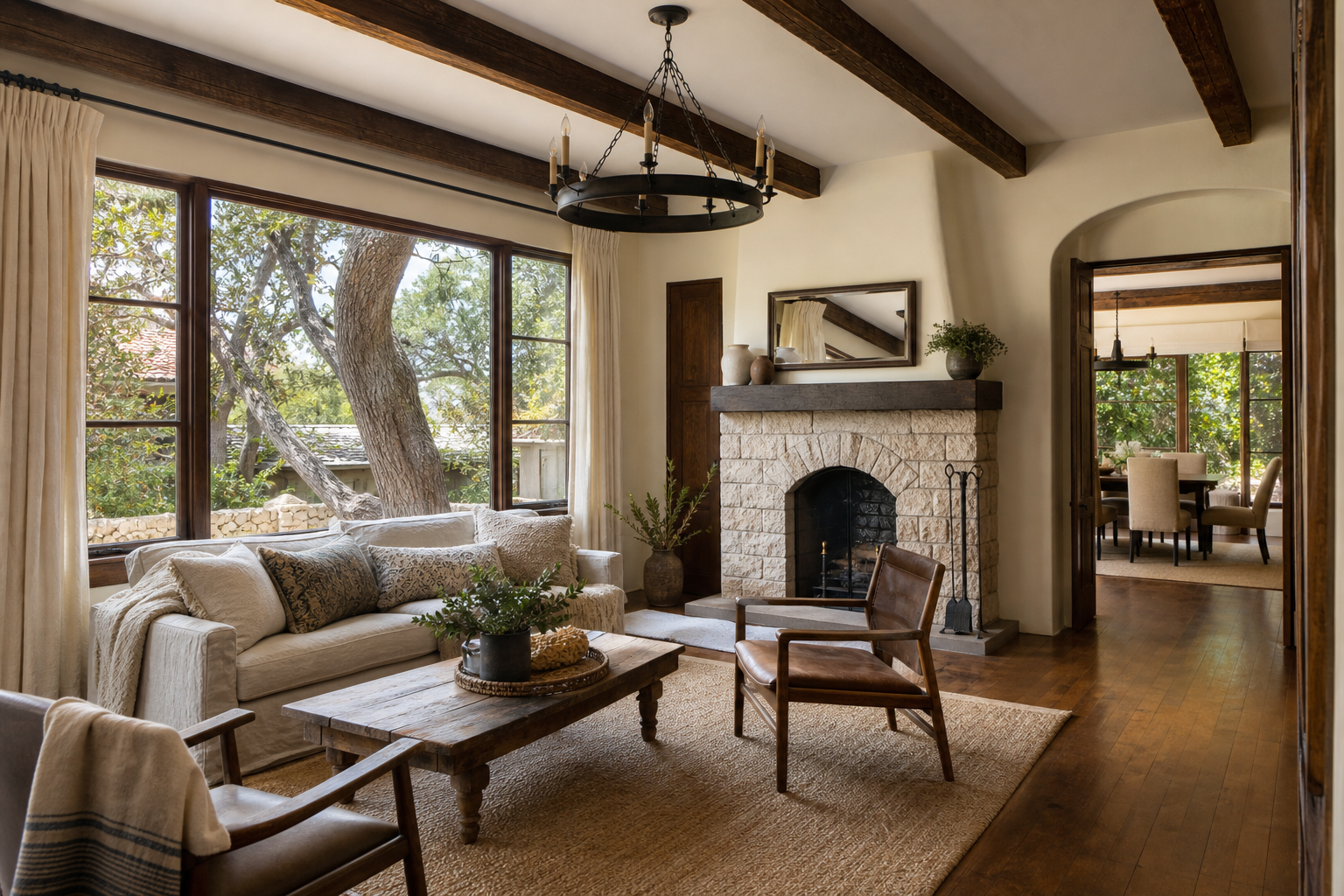
A historic Carmel home for sale should be prepared in this order: check the City's permit and historic-status records, repair original materials before replacing them, and confirm with the Planning Department before touching windows, roofs, or siding. Reversible interior upgrades are the most defensible pre-sale work.
Historic Carmel Home for Sale Prep Before You List
How should you prepare a historic Carmel home for sale?
A historic Carmel home for sale should be prepared in this order: check the City's permit and historic-status records, repair original materials before replacing them, and confirm with the Planning Department before touching windows, roofs, or siding. Reversible interior upgrades are the most defensible pre-sale work. The goal is a home that shows well and holds its architectural integrity, without a permit problem surfacing mid-escrow.
Key Takeaways
- In Carmel-by-the-Sea, projects involving exterior changes, including a new roof, siding, windows, or additions, must be evaluated for historic status before development review.
- A home that is not on the City's historic inventory but is more than 50 years old may still need a historic evaluation before exterior-alteration permits are issued.
- The City reviews window material, dimensions, and placement, so replacing windows shortly before listing carries real review risk.
- Design Review approval and a building permit are separate approvals, and a project may need both.
- The City does not publish a single universal review timeline, so your listing schedule should be set only after the specific project is confirmed with the Planning Department.
What should you check first before listing a historic Carmel home?
Start with the City's records on your parcel, then confirm your home's historic status before you choose any renovation scope. Every other decision in a historic Carmel home for sale depends on those two answers.
William walks sellers through this sequence before a single contractor is called, because the order matters. Ordering materials first and asking questions second is how a pre-sale project turns into a delayed listing.
Pull the permit history
Carmel's Community Planning & Building Department provides a GIS mapping tool and access to electronic permit history for parcels within the City. Reviewing it shows you the sequence of past work and can reveal undocumented additions or alterations. You want to learn about those before a buyer's inspection or title review does.
Confirm historic status and the 50-year trigger
Work through these questions in order:
- Is the property listed on the City's Inventory of Historic Resources?
- If it is not listed, is the home more than 50 years old? The Planning Division says such a property may require a historic evaluation before permits for exterior alterations are issued.
- What exterior work is actually on your list, and has the Planning Department seen it?
For listed properties, the City requires review by its Historic Preservation Consultant and approval by the Historic Resources Board. Projects must also comply with the Secretary of the Interior's Standards, the Carmel Municipal Code, and applicable design regulations, as described on the City's Historic Preservation page.
Your specific answer depends on your parcel's records and history. That is exactly the kind of question a pre-listing consultation with William is built to settle.
Which exterior changes need City approval in Carmel-by-the-Sea?
Most exterior alterations and site-coverage changes need a Design Review permit, and construction, electrical, re-roofing, plumbing, and driveway-replacement work generally needs a building permit. The City's Planning Division FAQ treats these as two separate approvals, and receiving one does not necessarily replace the other.
How does the review path change with the scope of work?
Carmel's Design Study/Review process distinguishes minor from major historic alterations. A minor proposal that does not comply with the Secretary of the Interior's Standards can be processed as a major alteration, so "small" is not something you get to decide on your own.
| Type of work | Likely review path | What to confirm first |
|---|---|---|
| Minor alteration compatible with the home's architecture | May be reviewed by City staff | That it meets the Secretary of the Interior's Standards, or it can be processed as major |
| Major alteration, such as a substantial addition or incompatible change | Evaluation by a qualified professional, plus Historic Resources Board review and approval | Whether a qualified evaluation is required and how it affects your schedule |
| Any exterior work on a property on the Inventory of Historic Resources | Historic Preservation Consultant review and Historic Resources Board approval | Compliance with the Secretary of the Interior's Standards, the Municipal Code, and design regulations |
| Exterior change on an unlisted home more than 50 years old | May require a historic evaluation before permits issue | Whether the Planning Division requires an evaluation for your home |
| Re-roofing, electrical, plumbing, driveway replacement | Generally a building permit, with historic-status evaluation first for exterior changes such as a new roof | Whether Design Review is also needed |
Why are windows the riskiest pre-sale project?
Windows are risky because the City specifically regulates them. Proposed changes to window materials, dimensions, or placement require Planning Department approval, and the City advises that window styles and materials be compatible with the building's architecture and consistent throughout the structure.
A sensible approach is to document the existing window pattern first, then investigate repair or a closely compatible replacement before committing to a new configuration. Replacing windows a few weeks before listing, without that groundwork, is the kind of shortcut that creates review risk and can leave you with a non-compliant exterior to disclose.
How long will review take?
There is no single universal timeline. The City's published material does not give one, and the duration depends on whether the work is minor or major, whether the property is designated, whether a qualified historic evaluation is required, and whether Planning Commission or Historic Resources Board review is triggered. Be wary of anyone who promises a fixed approval period before the City has seen your project.
Build the listing date around the review, not the other way around. If you are weighing a project against a target market date, William will help you decide whether the work is worth doing before the sale or better left as a disclosed opportunity for the next owner.
How do you modernize a historic Carmel home without losing its character?
Repair what exists, improve systems without changing the street-facing look, and keep interior upgrades reversible where feasible. This is an application of the City's stated compatibility framework, not a City-issued list of guaranteed approvals, so it still needs to be checked against your specific home.
The City describes its design process as one meant to respect the community's design traditions while allowing reasonable development and change. Read that as permission to modernize, within limits.
What pre-sale work is most defensible?
- Repair original fabric such as siding, trim, doors, and wood details before considering replacement.
- Address safety and deferred maintenance, including roofing condition, drainage, and mechanical, electrical, and plumbing concerns. Remember that re-roofing generally needs a building permit.
- Improve systems quietly, with heating, wiring, and insulation upgrades that do not visibly alter the exterior.
- Keep interior updates reversible, such as lighting, finishes, paint, and kitchen or bath refreshes that do not remove original details.
- Document everything, including permits, repair records, and the home's original features, so buyers and their advisors can see the full picture.
What do buyers respond to in a historic Carmel home?
They respond to the property itself: intact original materials and craftsmanship, a floor plan that works, and evidence that the systems have been cared for. Updated kitchens and baths matter, but a historic home that has lost its original details to a rushed remodel often gives up the very qualities that set it apart from newer construction.
William's view is that preparation creates value. He would rather spend the time getting a historic property right before it reaches the market than spend months explaining why it has not sold. For a home with architectural significance, that preparation is as much about what you decide not to change as what you update.
How does this fit with staging, remodeling, and pricing?
Presentation comes after the permit and preservation questions are settled. Once your scope is clear, luxury home staging in Carmel helps the retained architecture read at its best. If you are planning more substantial work, this practical plan for remodeling in Carmel-by-the-Sea covers how to approach it. For a broader view of what moves value here, see what drives home value in Carmel-by-the-Sea. Buying across the bay? The rules differ, as this look at historic home rules in Pacific Grove shows.
Whether a particular upgrade will add to your price or simply add to your timeline is a judgment call that depends on your home's condition, location, and architecture. William runs that analysis before clients commit to a scope.
Want a second opinion on what your home needs before it hits the market? Reviews from past clients are on Google, Zillow, and Realtor.com.
FAQ
Do I need City approval to replace windows or a roof in Carmel-by-the-Sea?
Yes, in most cases. Changes to window materials, dimensions, or placement require Planning Department approval, and a new roof is an exterior change that must be evaluated for historic status before development review. Re-roofing also generally requires a building permit, so confirm both approvals with the City before ordering materials.
Does my Carmel home need a historic evaluation before I list it for sale?
Not necessarily for the sale itself, but it may be required before you do exterior work. The Planning Division says an unlisted property more than 50 years old may require a historic evaluation before exterior-alteration permits are issued. If you plan no exterior changes, the question is mainly one of knowing your home's status before buyers ask.
How long can historic-preservation review take in Carmel-by-the-Sea?
The City does not publish one universal timeline, so the honest answer is that it depends on the project. Minor alterations may stay at staff level, while major alterations or work on a designated resource may require a qualified professional's evaluation and Historic Resources Board action. Confirm the review path for your specific project before setting a listing date.
Can I add energy-efficiency improvements to a designated historic home?
Often yes, particularly when the work improves systems without visibly altering the street-facing character. Designated properties must still comply with the Secretary of the Interior's Standards, the Carmel Municipal Code, and applicable design regulations. Discuss any exterior component, such as windows or roofing, with the Planning Department before you commit.
Should I restore original materials before putting my Carmel home on the market?
Repair is generally the safer first step, because repairing existing fabric tends to carry less review risk than replacing it. Whether full restoration pays off depends on the home's condition and your timeline, so it is worth weighing the work against the likely result before you start.
The core point is that a historic Carmel home sells best when the records are checked, the scope is preservation-minded, and the approvals are in hand before the sign goes up. William brings more than 36 years of Monterey County experience with historic and architecturally significant properties to that planning. To talk through your home's status and a realistic pre-sale scope, schedule a consultation for a Home Valuation with Carmel Luxury Group.
Equal Housing Opportunity. William Smith, Founding Broker, Carmel Luxury Group at Coldwell Banker Realty. Regulated by the California Department of Real Estate (CA-DRE). Affiliated real estate agents are independent contractor sales associates, not employees. This article is general information, not legal, tax, or financial advice; confirm your own numbers and requirements with the City of Carmel-by-the-Sea, your title company, tax advisor, or lender.