
Memorial Villages Home Pre-Listing Plan Your Agent Needs
By Future Real Estate, Future Real Estate ·
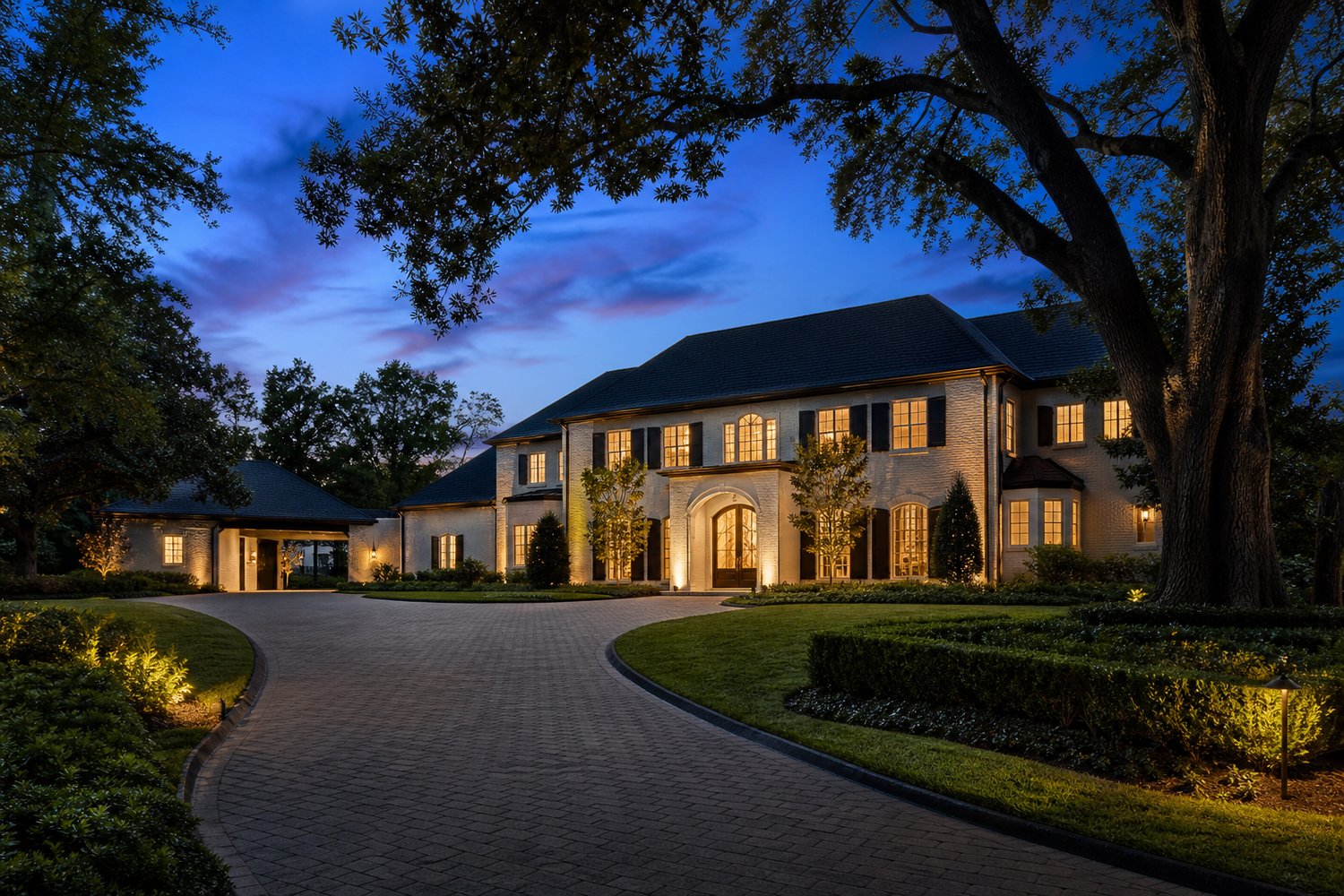
Before you sign, ask your agent to put the plan on paper: a defined comp boundary, closed sales ranked by similarity, a condition review, a dated launch calendar, marketing built for your specific house, and a set date to reassess price. If any piece is missing, you're looking at a generic checklist.
Memorial Villages Home Pre-Listing Plan Your Agent Needs
What should a listing agent do before listing a Memorial Villages home?
Before a Memorial Villages home goes on the market, your agent should define the exact comparable-sale boundary, rank recent closed sales against your property, review its condition and paperwork, set a dated launch calendar, and build marketing around what actually differentiates your house. Each decision should trace back to evidence from your property and this market. A plan that could be pasted onto any house in any ZIP code isn't a plan.
Key Takeaways
- HAR's October 2026 market-area page reported 105 homes for sale in the Memorial Villages at an average asking price of $3,010,401, but those are asking figures, not closed-sale proof of value.
- The Memorial Villages are commonly grouped as six municipalities (Piney Point Village, Hunters Creek Village, Bunker Hill Village, Hedwig Village, Spring Valley Village, and Hilshire Village), so your agent must state which boundary the comps come from.
- "Memorial Close In" is a broader MLS-style area label that can include properties outside the six incorporated villages, and mixing it in without saying so can distort your price.
- Recent closed sales are the strongest pricing evidence, while active and pending listings show competition and demand but do not prove value.
- Seller's disclosure records, permits, and warranties should be gathered before launch, not scrambled together after the first offer.
- A credible plan names a review date and the criteria for a price adjustment before the listing goes live.
I've sat across the table from owners who interviewed three agents and got three glossy presentations that looked identical. The difference showed up only when they asked, "What exactly will you do in the next 30 days, and why?" That question is the real test of a Memorial Villages home listing plan, and the sections below show what a good answer sounds like.
How should your agent price a Memorial Villages home?
Your agent should price from recent closed sales that match your property on lot, living area, age, renovation quality, and street setting, after clearly defining the geographic boundary used for those comps. Asking prices and a quick automated estimate are not enough on their own.
Start with the boundary, not the number
"Memorial Villages" is a market grouping, not a single place. HAR's Memorial Villages market-area page groups six municipalities: Piney Point Village, Hunters Creek Village, Bunker Hill Village, Hedwig Village, Spring Valley Village, and Hilshire Village. "Memorial Close In" is a separate, broader label that may include properties outside those six villages.
Ask your agent which of three searches they're running:
- Your specific village only
- Your village plus adjacent Memorial Close In areas
- The broader six-village grouping
There's no single right answer. A large-lot property may need a wider search because there are fewer true matches, while a more standard property may be best priced from tighter, closer sales. What matters is that the agent states the choice and the reason behind it.
Ask for a tiered comparable set
The strongest comps are recent closed sales with similar lot size, living area, construction era, renovation quality, bedroom and bath count, garage configuration, pool and outdoor improvements, and street setting. Here's how the different kinds of evidence should be weighted:
| Type of evidence | What it tells you | Weight in pricing |
|---|---|---|
| Recent closed sales | What buyers actually paid for comparable properties | Primary evidence |
| Pending sales | Current demand, though final terms aren't confirmed until closing | Supporting evidence |
| Active listings | Your competition and what sellers are hoping to get | Context only |
| Expired or withdrawn listings | Price points the market has already declined | Context only |
Be careful with asking-market numbers
HAR's October 2026 page showed 105 homes for sale and an average asking price of $3,010,401. That's useful for understanding how crowded the field is. It does not tell you what your house will sell for. An average across all active listings blends very different properties, and asking prices are a hope, not a result. If your agent leads with an average asking figure to justify your price, push back and ask for the closed-sale evidence.
Every market observation should also be labeled by month or quarter. Conditions in October and November 2026 may not describe the window when your home actually goes live. This is why a professional valuation specific to your property matters more than any headline number. I'm happy to run one for you through my home valuation page.
What condition and paperwork work should happen before the listing goes live?
Your agent should walk the property with you, review its major systems and documentation, and separate repairs that protect marketability from cosmetic projects you may never recover. All of that should happen before photography, not after an inspector finds it.
The condition review
For homes in these villages, I expect the pre-listing review to cover:
- Roof and HVAC age
- Drainage and grading around the house
- Foundation or structural concerns
- Any history of water intrusion
- Pool and outdoor systems
- Tree risks near the structure
- Permitting records where relevant
- Insurance-related questions
- Whether recent improvements are documented
Then comes the harder conversation: which items to fix, which to disclose and price in, and which to leave alone. A buyer who finds a surprise tends to reprice the whole house in their head, so known issues are better handled on your terms. Your agent should help you weigh repair, credit, or as-is in dollars and timing for your specific house, which is a conversation worth having in person.
Disclosure preparation belongs before launch
Texas requires a Seller's Disclosure Notice for previously occupied single-family residences. It covers material facts and the property's physical condition under Texas Property Code §5.008. Gather your repair records, permits, warranties, surveys, inspection reports, and any insurance claim information first, so the notice is accurate and complete when it's time to fill it out.
If the home was built before 1978, federal lead-based-paint rules also apply. TREC publishes a lead-based paint addendum, and the seller must provide known information and available records before the buyer becomes contractually bound. Your agent should flag this at the pre-listing stage if it applies.
How should the launch and marketing plan fit your property?
The plan should lay out a calendar with specific dates, then match the photography, copy, and showing approach to the type of property you own. A renovated architectural home, a large-lot estate, and an older home with redevelopment potential should never get the same package.
A calendar with real dates
Ask your agent to commit to dates for each of these:
- Intended listing month
- Repairs and staging completed
- Photography and measurement day
- MLS activation date
- First-weekend showing plan
- The date to evaluate traffic and offer activity
If you're weighing timing, my post on the ideal timing for selling a luxury home in the Memorial Villages goes deeper. Either way, the best listing date is the one when your home is actually ready, not the one that looks good on a generic calendar.
Marketing matched to the asset
Your listing materials should make your home's strongest differentiators concrete: lot dimensions, renovation scope, major-system updates, outdoor living, privacy, and exactly where the property sits within its village. A teardown candidate is sold on its land and its potential. A recently remodeled home is sold on the quality and documentation of the work. If you own a design-forward property, the way it's framed matters, which is something I explore in my post on architectural styles in Bunker Hill Village's luxury homes.
I bring outside-the-box marketing and tech to every luxury listing, but the tools only matter when they're matched to what your home actually offers. If you want to see how the six villages differ before you choose a boundary for your comps, start with my guide to neighborhoods in the Memorial Villages.
What questions should you ask a listing agent before you sign?
Ask for measurable checkpoints in writing: expected showing volume, how feedback will be gathered and shared, what happens if traffic is weak, the criteria for a price adjustment, and the date the strategy gets reassessed. In luxury real estate, honest feedback and steady communication are what actually move a home, and a plan without checkpoints leaves you guessing.
- Which boundary are you using for comps, and why?
- Which closed sales are your closest matches, and where does my home differ from each?
- What condition items do you want addressed before launch?
- What are the exact dates for photography, MLS activation, and the first showing weekend?
- How will you market this property differently from other homes in the village?
- When will we review traffic, and what will trigger a price change?
One more point on the agreement itself: broker fees are fully negotiable and not set by law. Ask for the listing agreement terms in writing, and discuss them directly with the agent. If a plan hides the details behind a template, that tells you something too.
Every house is different, and the only way to pressure-test a plan is to put your actual property next to it. That's the first thing I do in a listing consultation.
If you'd like to hear what past clients say about working with me, you can read my reviews on Zillow.
FAQ
How does my Memorial Villages agent choose comparable sales for my exact home?
Your agent should start with recent closed sales and filter by lot size, living area, construction era, renovation quality, bedroom and bath count, garage setup, pool and outdoor improvements, and street setting. They should also tell you whether the search is limited to your village, extended to Memorial Close In, or drawn from the six-village grouping. Ask to see each comp and an explanation of how your home differs.
Should I price my Piney Point Village house differently from a similar home in Hunters Creek Village?
Possibly, but the reason should come from closed-sale evidence, not an assumption. Each village is its own municipality, and lot sizes, street settings, and housing stock can differ. Your agent should compare your house to actual sales of properties with similar attributes in the relevant village before deciding whether the two should be priced alike.
Which repairs are worth making before listing a Memorial Villages home?
Repairs that protect marketability usually come first: roof, HVAC, drainage, water intrusion, and structural concerns. Optional cosmetic work is a separate decision, because it may not be recovered in price. Your agent should help you sort each item into fix, disclose, or leave alone, based on your home and your timeline.
Should I renovate, offer a credit, or sell my home as-is?
It depends on the scope of the work, how the closest comps sold, and how much time you have. A renovation can pay off when it brings the home in line with the stronger comps, while a credit or as-is sale can make sense when the work is large or the timeline is tight. Run the specific numbers for your property with your agent before choosing.
How quickly should my agent change the price if there are no offers?
The review date and the adjustment criteria should be agreed before the home is listed, not improvised later. Your agent should tie the decision to showing volume, buyer feedback, and the competing listings and sales in your comparable set. If the plan says only "we'll test the market," ask for something more specific.
The bottom line on your Memorial Villages home listing
A good agent shows you the boundary, the comps, the condition review, the launch calendar, the marketing approach, and the reassessment date before you sign anything. If you want to see how that looks for your own property, schedule a consultation with me, or request a free home evaluation to start with the numbers.
Equal Housing Opportunity. Future Real Estate | License# 9008399, regulated by the Texas Real Estate Commission. This article is general information, not legal, tax, or financial advice; confirm your own numbers with your closing agent, tax advisor, or lender. All information is deemed reliable but not guaranteed and should be independently reviewed and verified.